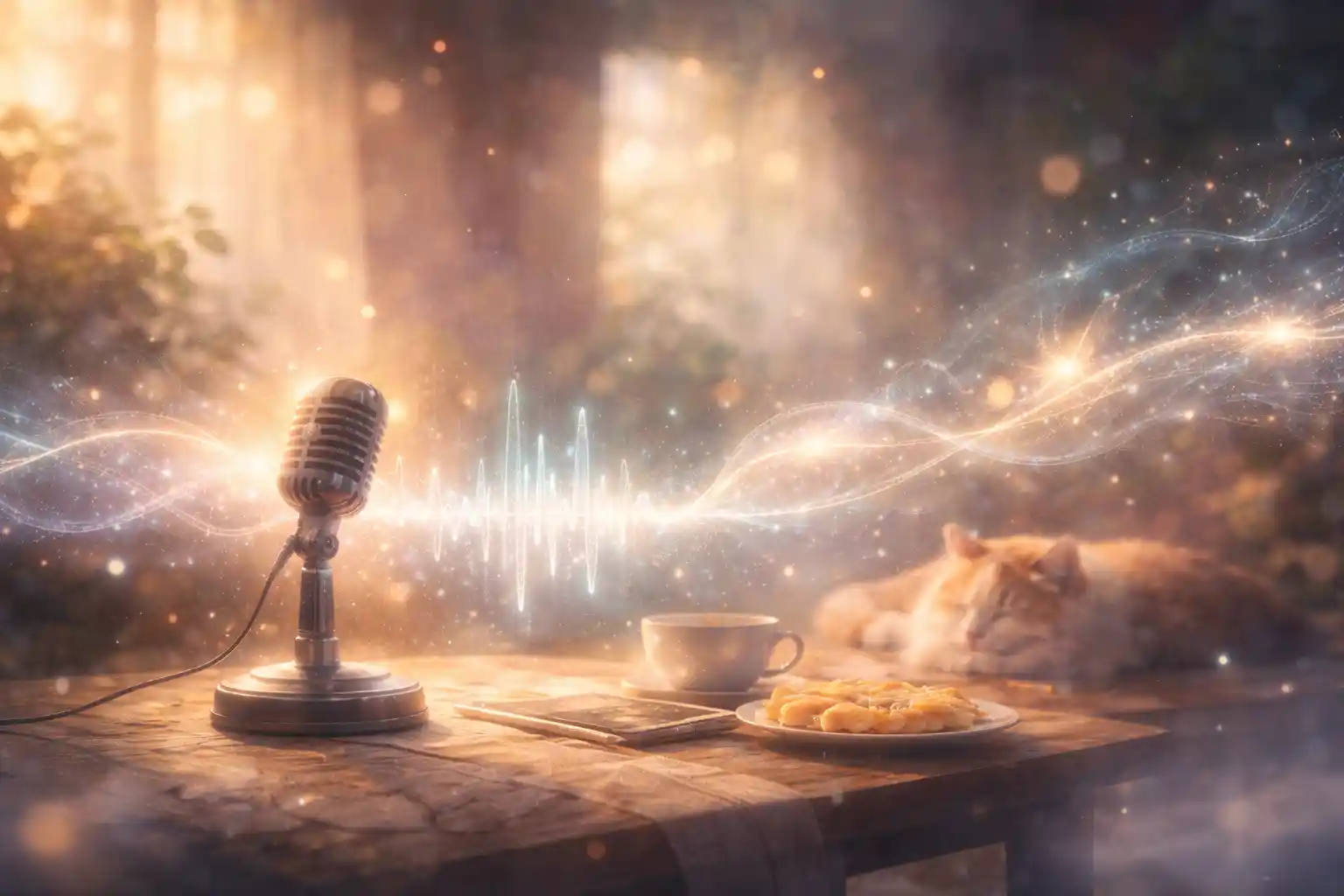
Scared to See You, but I Want to Hear You Again — Can AI Revive the Voices of the Dead? —
Author: MikeTurkey, in conversation with claude
Date: 21 Dec 2025
Other Languages
AI-translated articles, except English and Japanese version.
81 Produce and ElevenLabs Announce Business Partnership
On December 15, 2025, 81 Produce, a major voice acting agency in Japan, and ElevenLabs, an AI voice technology company, announced a business partnership.
81 Produce is one of Japan's most established voice talent agencies, celebrating 45 years in business with over 400 voice actors on their roster.
Through this partnership, voice actors' voices will be registered on ElevenLabs' platform, enabling multilingual content in 29 languages while preserving each actor's unique vocal qualities and tone.
The collaboration comes in response to growing concerns about voice actors' voices being used without permission for AI generation. ElevenLabs will help prevent unauthorized use through technologies like digital watermarking while supporting legitimate multilingual expansion.
Michiyoshi Minamisawa, president of 81 Produce, even mentioned the possibility of reviving the voices of deceased voice actors, stating that "voice actors and AI will coexist as we enter an era of expanding and evolving content."
A new concept has also emerged: the "hybrid voice actor"—someone who possesses both their original Japanese voice and multilingual AI-generated versions.
Reading this news, a thought suddenly crossed my mind.
Could we hear "her" voice again?
I found myself thinking of Miyu Matsuki, who had belonged to 81 Produce.
Introducing Voice Actress Miyu Matsuki
Miyu Matsuki was a female voice actress who belonged to 81 Produce. She's best known for voicing Yoshinoya-sensei in Hidamari Sketch.
With her bubbly, lively voice and an endlessly entertaining personality, she was beloved by many fans.
In Japan, voice actors often host radio shows, and she was a popular radio personality. Her ability to pull co-hosts into hilarious conversations kept listeners coming back for more.
Her personal blog was filled with posts about her cat and food—she once said, "Eating means living," showing how much she treasured life's simple pleasures.
On October 27, 2015, she passed away at the age of 38 from Chronic Active Epstein-Barr Virus Infection (CAEBV).
I wasn't exactly a devoted fan myself, but there was a time when I used to listen to her radio show.
Even now, sometimes I wish I could hear that voice just one more time.
Tip
Hidamari Sketch is based on a manga by Ume Aoki.
The anime ran for four seasons.
Yoshinoya-sensei is an art teacher at the school.
While she doesn't act much like a typical teacher, she embodies the free-spirited, unconventional personality you might expect from an art instructor.
Tip
Chronic Active Epstein-Barr Virus Infection (CAEBV) is an extremely rare condition.
Most people who contract the Epstein-Barr virus experience no life-threatening effects,
but in rare cases, the virus becomes persistently active and can be fatal.
Treatment methods are currently being actively researched.
The Case of AI Hibari Misora
However, something had been bothering me.
The "AI Hibari Misora" incident.
What exactly happened there?
In 2019, NHK undertook a project to resurrect Hibari Misora—a legendary singer beloved by all of Japan—through AI technology, 30 years after her death.
Using Yamaha's vocal synthesis technology to recreate her voice and 3D CG to recreate her image, they had her perform a new song called "Arekara" (Since Then).
During that year's Kohaku Uta Gassen (Japan's annual New Year's Eve music show), she appeared on stage as a 3D hologram.
During the song's interlude, she spoke to the audience: "It's been a while. I've been watching over you all this time."
While family members and longtime fans were moved to tears, criticism poured in. "It's creepy," some said. "This is an insult to the dead."
The famous singer Tatsuro Yamashita dismissed it with a single word: "Sacrilege."
Why did people react this way when they longed to see their loved ones again?
I Want to See You, but Please Don't Appear Before Me
I believe there are two reasons for this reaction: the visual recreation and the words that didn't feel like her own.
Why is visual recreation problematic?
Online, critics cited the "uncanny valley" from robotics.But what struck me more was something deeper—a primal fear.People are terrified of zombies and ghosts.We long to see our departed loved ones, but we don't actually want them to physically appear before us.Think about it for a moment.You might wish you could see your late grandmother or grandfather again, but if they suddenly appeared right in front of you, looking completely real—that would be terrifying.Speaking on behalf of the deceased
During the performance, she said to the audience, "It's been a while. I've been watching over you all this time."But no one can know whether Hibari Misora herself actually felt that way.Putting words in a dead person's mouth—claiming to speak their thoughts—could rightfully be called sacrilege.
So how should we maintain an appropriate distance from the departed?
The answer might lie in the tradition of the "Itako."
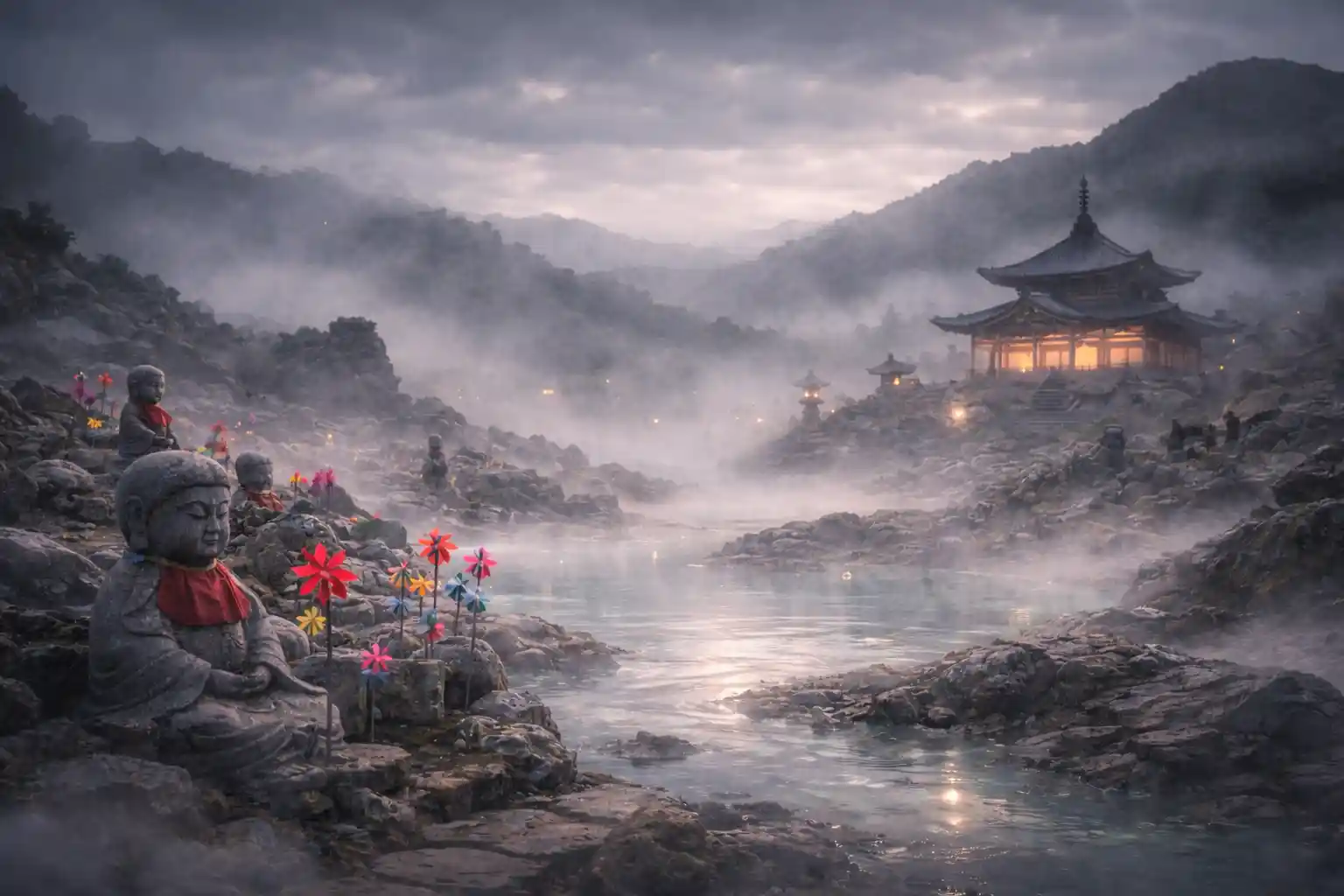
The Wisdom of the Itako — How Japanese Spirit Mediums Maintain Distance from the Dead —
In Japan, there are spirit mediums called "Itako."
At a place called Mt. Osore in Aomori Prefecture, they summon the spirits of the deceased and convey their words.
While the Itako tradition at Mt. Osore has a history of only about 80 years since World War II, it offers valuable insights into how we might relate to the dead.
Mt. Osore features a desolate landscape shaped by volcanic activity, with the smell of sulfur hanging in the air.
The otherworldly scenery of rocky terrain and lakes feels unreal—as if you've stepped into the afterlife.
Nature itself creates a stage at the boundary between the world of the living and the world of the dead.
Visitors come to this ethereal place to meet with an Itako and hear words from the deceased.
The departed's form remains unseen.
Their voice reaches you only through the Itako as an intermediary. There's no terror of seeing a ghost.
Yet people still feel a genuine connection to their loved ones.
Isn't this a form of wisdom about maintaining the right distance from the dead?
Tip
Mt. Osore is one of Japan's three most sacred sites, located in Aomori Prefecture.
Its barren volcanic landscape has been likened to "hell,"
and since ancient times, it has been revered as a place where the souls of the dead gather.
Even today, major festivals are held in summer and fall, drawing many visitors seeking the Itako's spirit channeling.
Tip
Itako are spirit mediums native to Japan's Tohoku region.
Unlike Western mediums who interpret messages from spirits,
Itako allow the deceased's spirit to enter their own body and speak directly as that person.
Clients request a specific deceased person, and through the Itako, they hear that person's voice.
How Should We Deliver the Voices of the Departed?
The partnership between 81 Produce and ElevenLabs has created the possibility of hearing deceased voice actors once more.
But what technology can do and what it should do are two different things.
The AI Hibari Misora case taught us that while people want to reconnect with the departed, they don't want them to fully return.
Scared to see them, yet longing for connection. The Itako have long honored this delicate balance.
If we're going to use AI to deliver the voices of the dead, we need that same wisdom.
Don't resurrect them visually in realistic form—deliver only their voice.
Don't put new words in their mouth—limit it to things they actually said in life, or lines from characters they played.
The voice and words should evoke a sense of nostalgia.
Make it clear that this is an AI recreation, and provide a special, set-apart space for the encounter with the departed.
And of course, the consent of the family is essential.
I'd love to hear Miyu Matsuki's voice again. But I don't want to see a ghost.
The lines from characters she played. That bubbly, energetic radio banter.
In that form, maybe we could meet again.
Attention
December 25, 2025 Update
A New Year's TV program will reportedly revive the late Mino Monta, a renowned Japanese TV host, using AI.
I hope the production will be handled with respect for the fact that he has passed away.
Function
def nostalgia_21dec2025(ai, human, revive, record):
    '''
    On reviving the deceased with AI

    dependencies:
        81 Produce × ElevenLabs partnership, Matsuki Miyu, AI Misora Hibari criticism

    input:
        ai: What can be done and what should be done are different
        human: Do not speak on behalf of the deceased's intentions
        revive: Family consent is required
        record: Voice over video, limited to statements made while alive

    output:
        joy: Voice + lifetime statements + extraordinary space → joy
        afraid: Visualization → instinctive fear
        angry: Speaking for the deceased → desecration
        sadness: (lingers as an aftertaste)
    '''
License
2023-2026 Copyright MikeTurkey All rights reserved.
Scope: This license applies to all non-code text content on miketurkey.com.
- Unauthorized copying and republication of this document is prohibited.
- Direct linking to this URL is permitted.
- If cited, summarized, or transformed, this copyright notice must be retained.
Illustration: Generated by MikeTurkey using DALL-E 3 (ChatGPT)